
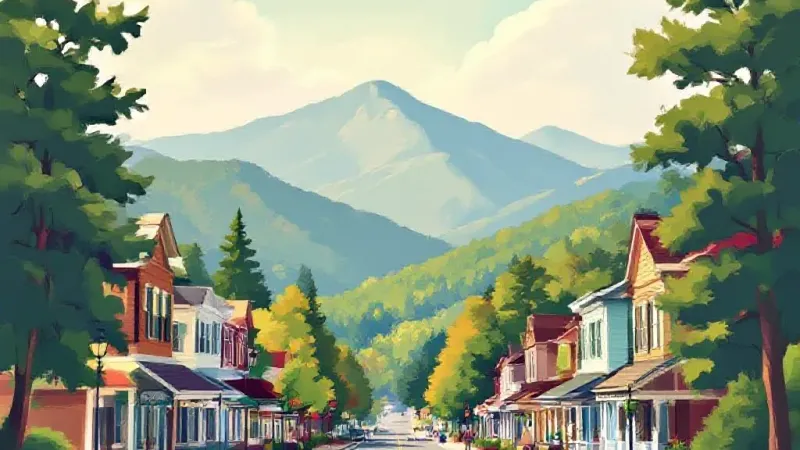
A warmer-than-average September has led to delays in the highly anticipated fall foliage season across the Blue Ridge Mountains. This shift in timing, driven by climate change and hotter temperatures, is impacting a crucial period for regional tourism.
Howard Neufeld, a retired Appalachian State University leaf expert known as “the fall color guy,” explained that temperature is a primary factor. Neufeld noted that the strongest correlation with the timing of peak color is the temperatures recorded in September and October, particularly in September. This year, September temperatures were approximately four to five degrees above historical averages, a deviation that concerned Neufeld. He indicated that for every degree above the historical September temperature, peak leaf colors can be delayed by about eight to ten days.
The increasing variability in the timing of the peak leaf season from year to year is a significant concern for Western North Carolina economies. Millions of autumn visitors are drawn to the region specifically for the fall colors. Kyle McCurry, a spokesperson for Explore Asheville, emphasized the economic importance of these visitors. He stated that the dollars spent by fall tourists at hotels, restaurants, outfitters, and shops enable outdoor-recreation and hospitality workers in Western North Carolina to support their families and cover living expenses.
McCurry further detailed the substantial economic contribution of fall tourism, reporting that tourists contribute $2.6 billion to the economy each year. This spending, according to McCurry, supports more than 25,000 jobs, which represents one in every seven jobs in the county. Additionally, these visitors generate over $900 million in local income and $215 million in state and local taxes. The region’s diverse elevations and temperature changes across its geography typically allow for an extended peak leaf season, making autumn the busiest time for tourism.
To help visitors navigate the changing leaf season, McCurry consults with Neufeld weekly. Updates are regularly posted on the Explore Asheville webpage, ensuring that visitors receive timely information on the best times for viewing.
Despite the delays, Neufeld expressed optimism for this year's viewing. He noted that the Blue Ridge Mountains have not warmed as much as some other parts of the country, partly due to the cooling effect of the extensive forest cover. The region is currently running approximately one week behind its historical peak. However, Neufeld suggested that colors at higher elevations should be particularly vivid, with peak displays already observed in areas such as the Grandfather Mountain Ranger District of the Pisgah National Forest. Recent rainfall combined with cooler temperatures this week may also contribute to good colors, even at lower elevations, within the next week and a half.