

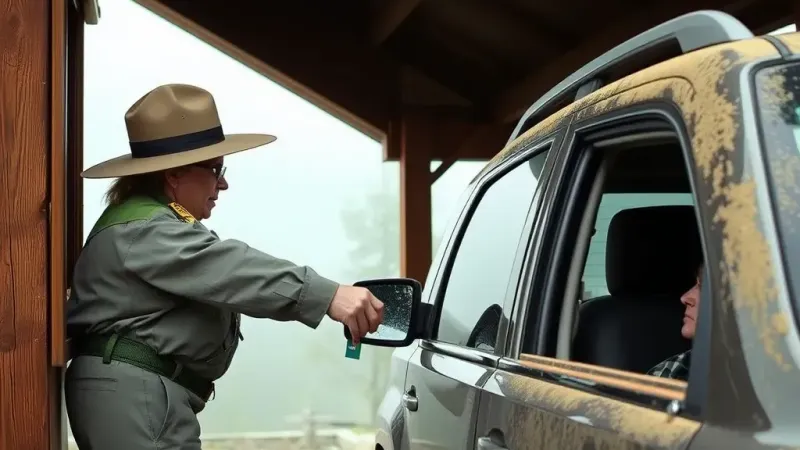
Great Smoky Mountains National Park adopted the Park it Forward parking tag program, according to park leadership. Superintendent Cassius Cash announced the parking tag and camping fee changes for the region.
Under the new parking tag program, visitors are required to display tags for vehicles parking within the park boundaries. Parking tags cost five dollars daily, fifteen dollars for up to seven days, and forty dollars annually, according to park leadership. These parking tag requirements apply to motorists visiting the mountain areas across the park.
In addition to the parking tag implementation, park leadership announced adjustments to camping fees across the park facilities. Frontcountry family campsite fees will be thirty dollars for primitive sites and thirty-six dollars for electric sites. Meanwhile, backcountry camping fees will increase to eight dollars per night with a forty-dollar camper maximum for those utilizing backcountry trails and designated wilderness camping areas.
Superintendent Cassius Cash told Yahoo, "Today marks a significant milestone in the history of Great Smoky Mountains National Park and I’m honored to be a part of it."
Before finalizing the program and fee adjustments, park leadership oversaw a public comment process. The public comment process generated three thousand six hundred seventy-seven correspondences and fifteen thousand five hundred twelve independent comments from individuals and groups expressing their views on the proposed changes.
These policy and fee updates arrive amid shifting visitation trends recorded by park leadership over recent years. Visitation increased by fifty-seven percent to fourteen million one hundred thousand visits in two thousand twenty-one. Following that peak period, Great Smoky Mountains National Park logged eleven million five hundred twenty-seven thousand nine hundred thirty-nine recreation visits in two thousand twenty-five, maintaining its status as a heavily visited natural destination.
The adoption of the Park it Forward parking tag program and the associated camping fee changes represent notable operational updates directed by park leadership for visitors traveling to the Tennessee and North Carolina parklands.